Gene Ryan Briones's blog
OpenNIC - Secure, Democratic, Censor-Safe and Free DNS Server System
Submitted by Gene Ryan Briones on Mon, 03/19/2012 - 11:00
A Silent War

Nothing is more important than absolute freedom. You cannot simply fool more than a billion people in the world and forbid them from accessing the free web space. With growing online presence and the impact of the online-hosted content on masses, Government sources, particularly the U.S., have incessantly become increasingly conscious about monitoring what type of content should be made accessible to the public. As of this writing, the U.S. has already initiated a long-term war against free trade by seizing domains.
The government may be playing it smart, but the people have grown wiser. You will probably agree that the Internet is free and that it cannot be tamed by any remote force, much more an entity such as the government. As these megalomaniacs are taking their delight on banning and blocking sites based on their canonical yet preposterous policies, our fellow cronies are determined to preserve, if not to instate, a transparent and open web, much like what it was years ago.
A Hidden Arsenal - OpenNIC

Unfortunately, the government has already blocked different sites based on domain names and by thereby corrupting the local DNS servers. To counter this, an innovative solution has been taken into consideration. It’s called the OpenNIC. Unlike OpenDNS that relies on redirection, filtering and search engine surveillance, OpenNIC features the top new domains which are not governed by ICANN or the Internet Corporation for Assigned Names & Numbers. With that being said, it’s safe to say that domains using OpenNIC cannot be interfered and stopped.
OpenNIC is all about freedom and sharing. OpenNIC is a 12-year old service used by a few number of elite people in the underground community. We’re talking about TiAMO (Pirate Bay dude) and NovaKing (EZTV dude). Essentially, it conducts democratic voting on new TLDs, Top Level Domains, as they are called, and it resolves all ICAAN approved TLDs. What that basically means is that with OpenNIC, you can visit your favorite sites even if a domain name has been blocked in your country. Now that sounds pretty cool does it?
The OpenNIC Advantage
- 5 comments
- Read more
- 3709 reads
Revolutionizing Web 2.0 Email Technology with Fluent
Submitted by Gene Ryan Briones on Mon, 03/12/2012 - 06:39One look at Fluent’s interactive demo will make you look at email clients like Thunderbird and Outlook in disgust. Created by Australian developers Cameron Adams, Jochen Bekmann and Dhanji Prasanna, who just quit their lucrative jobs at Google after Google Wave was axed, Fluent aims to take off where Google Wave has left off. Fluent blends social networking, cloud folders, email accounts and personal diaries into one nifty package.
The response to the service when it was first released as a beta service was so overwhelming that the limited signups (around 500) were all filled up within minutes after launch. As we pen our thoughts about Fluent as of this moment, the app is still in the beta stages and the developers are still expecting the service to be launched somewhere around the end of the year. For now let's look at what the service has in store for us.
User Interface

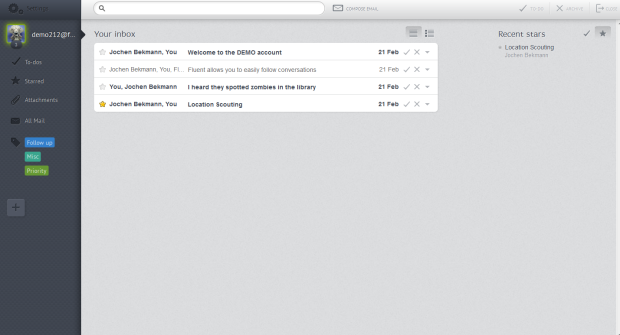
The biggest thing that users will appreciate about the service is the user interface. Although webmail providers like Yahoo have tried their best to improve their user interface, none of the current email services can honestly compare to the great look and feel of Fluent’s interface. As soon as you open a mail, you can send a quick reply just like you would comment on Facebook.
Images and files sent to you can be easily viewed through the attachments tab or by directly clicking the file. You no longer need to download your attachments and then upload them to your Dropbox or other similar services manually. Literally, everything can be done through Fluent without the need to initiate downloads.
Searching for emails or attachments is also very easy. You can filter your search by a number of criteria like date, image, read or unread. Someone at Google must be kicking themselves for letting go of such talented minds, seriously.
- 2 comments
- Read more
- 3316 reads
W3C Responds to New Copy Protection Proposal by Google, Microsoft & Netflix - Mozilla warns of a possible non-cooperation
Submitted by Gene Ryan Briones on Sat, 02/25/2012 - 23:07It's sad. Google, Microsoft and Netflix has recently published its draft proposal of the Encrypted Media Extensions policy that aims to push DRM (Digital Rights Management) to web browsers. Although the proposal does not intend to forcibly implement the DRM platform, it's still a huge blow to parties that will be involved in the process. As expected, among those who responded to the draft posted on the W3C website is our good and faithful friend Mozilla. Mozilla was quick to question the proposed framework's capability to provide the much needed security demanded by content providers once it is implemented. Chris Pearce of Mozilla asked, "Can you highlight how robust content protection can be implemented in an open source web browser? How do you guard against an open source web browser simply being patched to write the frames/samples to disk to enable (presumably illegal) redistribution of the protected content?"

According to the authors David Dorwin (Google), Adrian Bateman (Microsoft) and Mark Watson (Netflix), their only aim is to provide essential components for a generic key-based content decryption system that is designed primarily to work with pluggable modules that will implement the decryption mechanisms. Furthermore, the Encrypted Media Extensions draft proposal emphasized the introduction of new API extensions for HTMLMediaElement, the interface that defines the specialized properties and JavaScript methods found in HTML audio/ video elements.
- Add new comment
- Read more
- 3224 reads
Easily Convert XPS to PDF Format With These Free Online and Offline Converters
Submitted by Gene Ryan Briones on Thu, 02/23/2012 - 22:12
Most people would prefer PDF, DOC or TXT, as their primary formats for document types. Ingeniously, Microsoft has developed a file format-XPS (XML Paper Specification) similar to that of the PDF file format. But instead of the post-script language, this format makes use of XML (Extended Mark-up Language). XPS also comes handy when you don't have an printer installed and the XPS virtual printer allows you to save the document in "ready-to-print" original format for later printing.
If a document is in an uncanny format like XPS (Open XML Paper specification), attempting to view it in some older versions of Windows OS using a conventional approach may not work out so well (XPS Viewer comes pre-installed in Windows 7 and Vista). So, if you have an XPS document with you and would like to convert it to a more generic format that is legible, recognized and more convenient, then you can start using the following tools:
A. Online Tools
- 4 comments
- Read more
- 2457 reads
Windows 8 to Revolutionize the Cloud with its New Skydrive Features
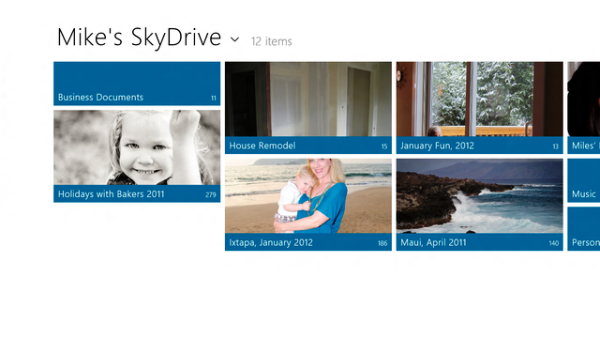
Submitted by Gene Ryan Briones on Wed, 02/22/2012 - 03:19In our relentless pursuit of bringing to you the latest updates of the Windows 8 development, today we've uncovered a very interesting update about the next-generation Windows OS. One of the updates that we got is the Metro app which, according to Microsoft, will be made available to any Metro application via the file picker of the OS. Microsoft hopes to turn the tables around by synchronizing the Metro app and its web versions. Since the Metro app is developed by using JavaScript, HTML and CSS web technologies on WinRT, making it OS-wide is very possible.

Another splendid feature that we find very interesting is Skydrive, Microsoft's own version of Dropbox which is expected to rise above its underdog status this year. Microsoft plans to offer a Skydrive cloud space automatically to any application that is capable of running documents, images and photos. The Skydrive cloud space will also be made available as a Sharing contract for its users via the new Charms bar. Pretty cool huh? But perhaps the biggest and the most exciting thing about Skydrive in Windows 8 is its capability to individually synchronize files straight from your desktop. Yes, you heard that right.
- 2 comments
- Read more
- 2388 reads
VideoLAN Releases VLC 2.0 with Tons of Amazing Features
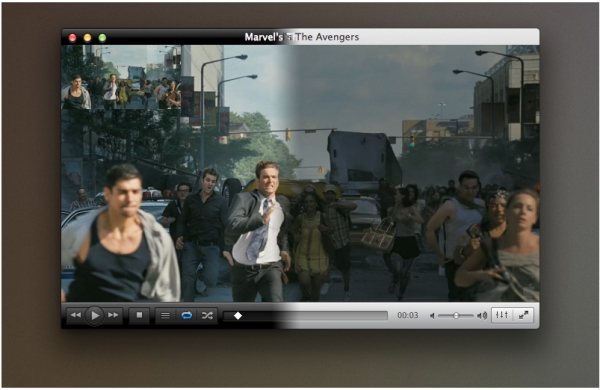
Submitted by Gene Ryan Briones on Mon, 02/20/2012 - 02:12Good news to all VLC users out there. VideoLAN, the developers of the open source media player has just released VLC 2.0 a.k.a. Twoflower. VLC 2.0 promises faster decoding on multi-core, GPU, and mobile hardware with greater flexibility in handling a wider range of formats. Another major update is HD and 10bits codecs, Twoflower also brings a new rendering pipeline that delivers new video filters for superior quality and better improved subtitles. What's more is that it's been revamped with a new interface as well as several hundred bug fixes, thanks to VideoLan's more than 160 dedicated volunteers.

New video features include a rewritten video ouput core and modules for subpicture blending in GPU, shader support in OpenGL for 10bits colorspace conversion, improved video output for Windows, Mac, Android and iOS, and anti-flickering and deinterlacing filters. Twoflower's audio system has been improved with a new set of resamplers for excellent audio quality and a new range of compressor and karaoke filters. VLC's audio core is now simplified for faster processing with new audio outputs for OS/2, Android and iOS.
- 4 comments
- Read more
- 5150 reads
FBI to Shut Down the Internet for Millions this Coming March 8
Submitted by Gene Ryan Briones on Sat, 02/18/2012 - 14:43The Federal Bureau of Investigation, in a desperate pursuit to finally put an end to the countless DNS attacks of the infamous worm named DNSCharger Trojan on millions of computers in the U.S. and other parts of the globe, has considered the plan to take down a huge number of DNS servers and along with it millions of Internet users. It's estimated that half of all Fortune 500 companies and 27 out of 55 government sectors are infected by the DNSCharger Trojan.

The FBI was able to temporarily stop the widespread of the virus by replacing the infected servers with newer ones, thus giving companies and individuals affluent time to clean up the mess. Unfortunately, the solution was not enough to stop the DNSCharger from spreading its wrath. Although the FBI, with the help of local authorities, was able to capture the Estonian programmers responsible for the attacks, by the time they knew about it, the Trojan has already been distributed to more than 100 countries.
- 3 comments
- Read more
- 6155 reads
Is Google Keeping Your Gmail Mailbox Private?
Submitted by Gene Ryan Briones on Fri, 02/17/2012 - 02:35Google is undoubtedly the most trusted, visited and celebrated site in the internet. We know that you love how Google searches everything we want in a matter of seconds while providing great services including Gmail, Google Docs and YouTube. But have you ever wondered if it’s really safe? For those of you who are surprised by my question, let me assert you that it’s a well-established fact that Google collects and maintains a database of everything you do on the Internet, be it a simple search, mail or burp. Okay, not burp.

Searches are alright. It won’t be at much of a loss practically. But what if someone tracks your mails? No, we are not being hypothetical here. According to Cristopher Nguyen, an ex-Google employee and part of Google apps operations, this is partly true. He said that some Gmail engineers have access to main servers and as a part of their job have access to go through mail-accounts of millions of users. However, he justified the fact that if any other employee wants to access an account, he has to justify the reason and do some paperwork first before actually getting through to the content in the account.
- Add new comment
- Read more
- 1892 reads
Facebook Launches New Timeline Apps
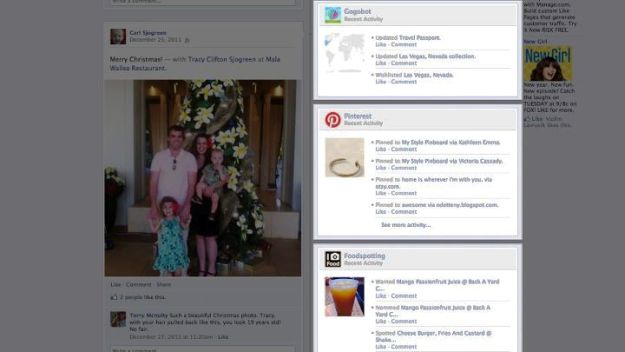
Submitted by Gene Ryan Briones on Thu, 01/26/2012 - 02:29Facebook is getting better and better. During Facebook's live press event last January 18, the social media mogul announced its new 60 Open Graph app partners. The new set of partners, ranging from food to fitness and from travel to lifestyle, will be working closely with Facebook in approving new apps for the platform. This should elevate Facebook to a whole new different level. According to Facebook, the new apps will give way for greater expression of activities among its users, needless to say, better collaboration and communication as well.

Last year, Facebook laid down its roadmap for 2012 when CEO Mark Zuckerberg said, “The next five years will be defined by the apps and the depth of engagement possible.” If all goes well, marketers and brands will find more opportunities to engage the vast number of Facebook users in the web. Some of the apps available today are Foodspotting, Foodily, Ticketmaster, Pinterest, Rotten Tomatoes, Pose, Kobo, Gogobot, TripAdvisor and many more.

- 4 comments
- Read more
- 3104 reads
Microsoft Reveals Plan for its New Windows 8 File System
Submitted by Gene Ryan Briones on Fri, 01/20/2012 - 12:29Finally Microsoft breaks the silence. A few officials from the world's leading software company has shared little details about Photogon - a new file system that, according to previous rumors, will be integrated into the forthcoming Windows 8 OS. A previous blog from Microsoft last Monday entitled "Building Windows 8" has revealed the additional details of the big picture when it announced the name ReFS (Resilient File System) as the official name of the new file system they are tediously working on.

Surendra Verma, Development Manager for the Windows Storage and File System Department, explained that prior to the official release of Windows 8, ReFS will start its life cycle as a storage system for the Windows Server. Then it will become a storage system for Windows clients and eventually a boot volume once Windows 8 arrives. Since one of Microsoft's primary goals in developing ReFS is to maintain a high degree of compatibility with a subset of widely used NTFS features while at the same time minimizing the ones with limited value, Microsoft is planning to stop supporting selected NTFS (New Technology File System) features including short names, compression, file level encryption, user data transactions, object IDs, named streams, hard links, sparse, extended attributes and quotas.
Now you can probably still recall that Microsoft has been using NTFS since Windows NT and Windows XP has been released. While NTFS - in all its complexity - might have worked perfectly in the past, in today's web 2.0 world, simplicity is the key. ReFS, also called Photogon, is architected to supplement Windows 8's drive-extender-style storage space. Surendra Verma said, “Underneath this reused portion (the code responsible for implementing the Windows file system semantics), the NTFS version of the code-base uses a newly architected engine that implements on-disk structures such as the Master File Table (MFT) to represent files and directories. ReFS combines this reused code with a brand-new engine, where a significant portion of the innovation behind ReFS lies.”